
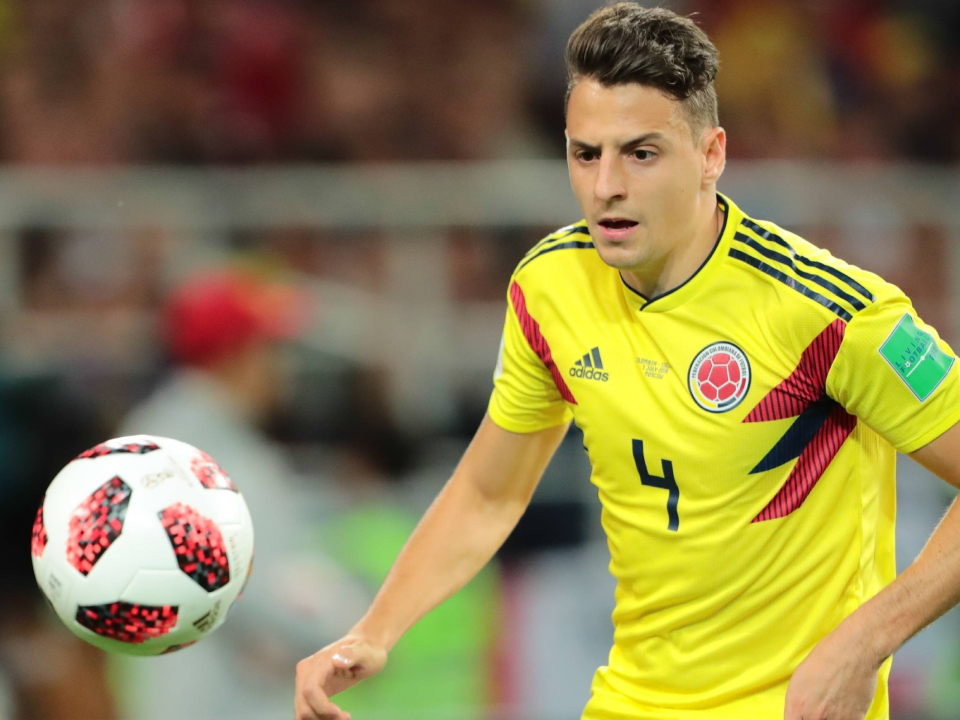
Football careers rarely move in straight lines, but few have swung as dramatically as Santiago Arias’.
At his peak, Arias looked like the prototype of the modern full-back quick, aggressive, tactically disciplined, and relentless in transition. Then came the injury that changed everything. For anyone searching a complete Santiago Arias biography, the defining theme is not only his rise through European football, but the resilience required to rebuild after one devastating moment altered the course of his career. As highlighted by jalalive, Arias’ story is ultimately about persistence more than perfection.
Medellín Beginnings and an Early European Move
Born in Medellín in 1992, Arias developed through the academy at La Equidad before attracting European attention at a young age.
Unlike many South American players who spend years establishing themselves domestically, Arias moved quickly into Dutch football with Sporting CP initially involved before his breakthrough truly accelerated in the Netherlands. (en.wikipedia.org)
The transition demanded adaptation:
- Faster tactical play
- Greater positional discipline
- Higher physical intensity
For an attacking full-back, those lessons were essential.
PSV Eindhoven: Where His Game Fully Formed
Becoming One of Europe’s Most Reliable Right-Backs
At PSV Eindhoven, Arias evolved from an energetic runner into a complete modern defender.
His profile became clearer:
- Constant movement up and down the flank
- Aggressive pressing in wide areas
- Reliable recovery speed in transitions
Importantly, he wasn’t reckless. His attacking instincts were balanced by strong positional awareness.
Why Coaches Trusted Him
Arias offered tactical reliability:
- Maintained defensive structure
- Supported build-up phases
- Delivered width without abandoning shape
That balance made him valuable in systems demanding intense full-back involvement.
Atlético Madrid: A Different Tactical Education
Entering Diego Simeone’s System
Moving to Atlético Madrid changed the nature of his football entirely.
Under Diego Simeone:
- Defensive concentration became non-negotiable
- Every positional mistake carried consequences
- Tactical discipline mattered more than flair
For many attacking full-backs, adaptation is difficult.
Arias adjusted surprisingly well.
Read more on Jalalive TV https://www.stoptoptwo.org/jadwal-bola-hari-ini/
Defensive Sharpness Over Freedom
At Atlético, his game became more controlled:
- Smarter pressing angles
- Better timing in tackles
- Improved defensive patience
The explosive runner from PSV became a more measured defender.
Who Is Santiago Arias?
Santiago Arias is a Colombian right-back known for his speed, tactical discipline, and relentless work rate. After successful periods in Dutch and Spanish football, he became a key figure for Colombia through his balance of defensive reliability and attacking support.
The Injury That Changed Everything
A Career-Altering Moment
In October 2020, while playing for the Colombia national football team, Arias suffered a severe ankle injury during a World Cup qualifier against Venezuela. (en.wikipedia.org)
The images were difficult to watch.
For a player whose game relied heavily on:
- Explosive acceleration
- Constant movement
- Physical intensity
the injury threatened far more than short-term availability.
The Mental Side of Recovery
Returning from such injuries is never only physical.
Players must also rebuild:
- Confidence in movement
- Trust in the body
- Aggression in duels
That process can take longer than the medical recovery itself.
Attempting the Comeback
Arias continued his career through spells at clubs including Granada and FC Cincinnati, searching for continuity after rehabilitation. (en.wikipedia.org)
These years were less about peak performance and more about rediscovery.
There were signs of adaptation:
- Smarter energy management
- More positional control
- Reduced dependence on raw explosiveness
Experience began replacing pure athleticism.
Playing Style: The Engine on the Right Side
Endless Movement
At his best, Arias brought intensity to wide areas:
- Overlapping runs into attacking zones
- Fast recovery during defensive transitions
- Constant support in possession phases
He helped teams maintain width without losing defensive balance.
Tactical Reliability
One of his underrated qualities was discipline.
He rarely drifted unnecessarily:
- Held shape during defensive phases
- Chose moments to attack carefully
- Understood rotational movement well
That made him especially valuable in structured systems.
A Question Fans Often Ask
How Good Was Santiago Arias Before His Injury?
Before the 2020 ankle injury, Arias was widely regarded as one of Colombia’s most dependable right-backs and had established himself at clubs like PSV Eindhoven and Atlético Madrid through his tactical intelligence and consistency.
Recent Years: Experience Changing the Role
As his career progressed, Arias adapted.
Less explosive perhaps, but more thoughtful:
- Better positional reading
- More controlled attacking involvement
- Greater reliance on timing rather than pace alone
Veteran full-backs survive by evolving, and Arias has worked to do exactly that.
Conclusion: A Career Defined by More Than Setbacks
Santiago Arias’ career cannot be understood only through injuries or transfers.
It’s a story about:
- Tactical growth across different football cultures
- Adapting from attack-minded football to elite defensive systems
- Fighting through one of football’s most difficult recoveries
At his best, he represented the modern full-back balance aggression with intelligence, movement with structure.
And even after the hardest chapter of his career, that identity never fully disappeared.